North America · Remote Settlement
Utqiagvik
United States
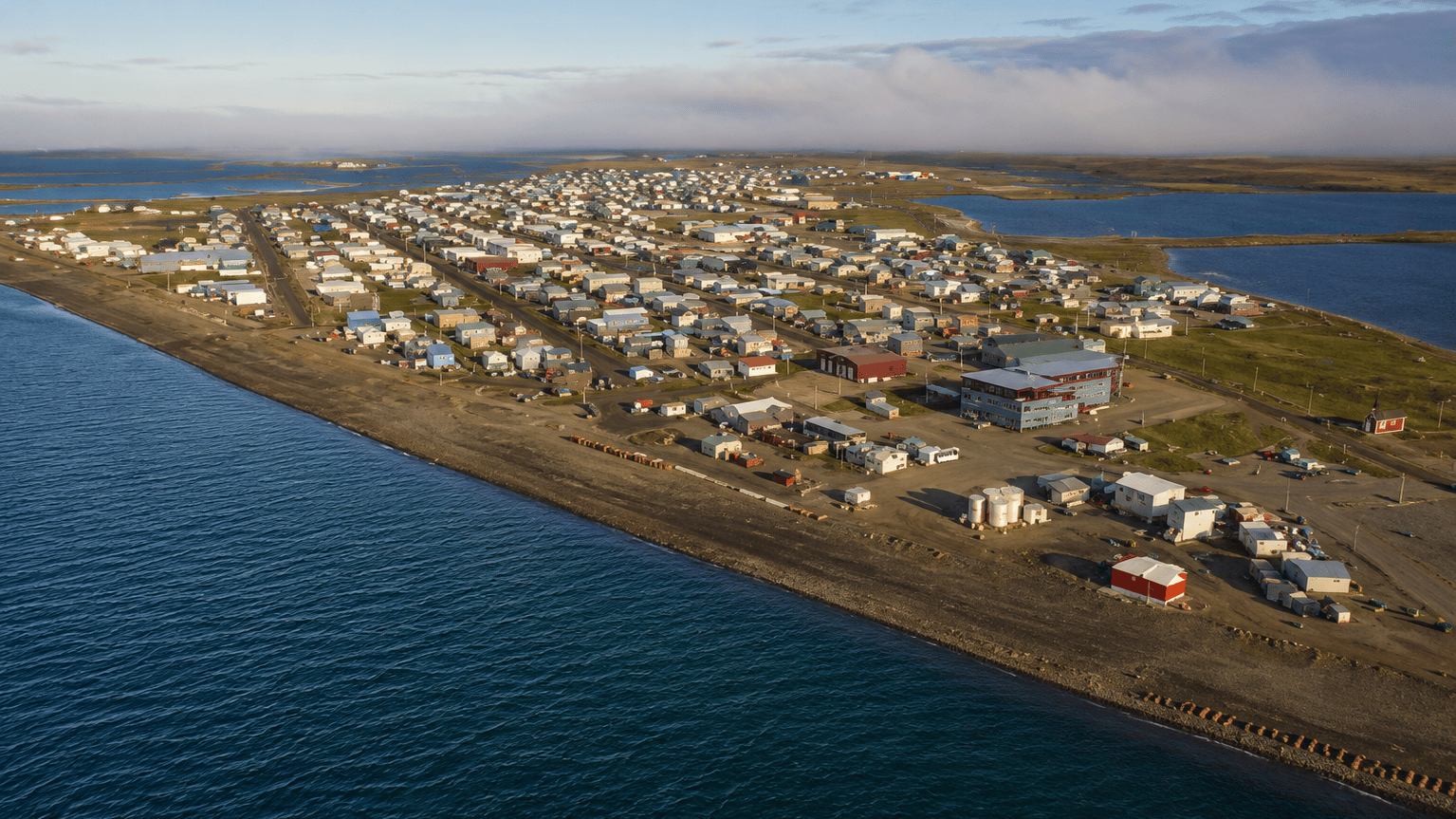
Utqiagvik's no-road Arctic separation is genuinely valuable, but the Base is an open town rather than a fortification. Its strongest long-term assets are an existing community-scale utility system and subsistence economy; its biggest weakness is how badly heat, water and power failures compound in the Arctic.
Overall
5.3 out of 10Defensibility
2 out of 10Isolation
8 out of 10Sustainability
6 out of 10Ranking context
How this base ranks
Global
#31 of 91 · Top 34.07%
Region · North America
#5 of 9 · Top 55.56%
Base Type · Remote Settlement
#6 of 17 · Top 35.29%
Field assessment
At a glance
Bottom Line
Excellent regional isolation, weak local defensive geometry, and a viable habitat only while essential energy and utility systems can be kept working.
Biggest Trade-off
Geographic separation and huge community capacity versus open-settlement defence and severe infrastructure dependence.
Most Likely Failure
An essential utility or fuel-maintenance chain fails and extreme conditions turn an otherwise viable settlement into an exposure hazard.
Score rationale
Why it scores this way
Defensibility · 2/10
Utqiagvik's remoteness is not a substitute for a defended boundary: the town itself is open and would require the group to contract into smaller controllable positions.
Advantages
- Sparse regional access reduces how often outside pressure can arrive.
Limitations
- Once walkers reach the settlement, there are many streets and edges rather than one hardened perimeter.
Isolation · 8/10
No road connection creates unusually strong regional separation, though Utqiagvik remains a populated transport-connected community rather than an unreachable wilderness site.
Advantages
- Normal access is by air rather than a road corridor linking the town to major population centres.
Limitations
- The Base itself contains thousands of residents and scheduled transport activity in normal conditions.
Sustainability · 6/10
A real year-round Arctic community proves strong habitat capability, but survival-critical utilities must remain operational in extreme conditions.
Advantages
- Housing, potable water, sewer, electricity and natural-gas heat already support a large resident population.
Limitations
- Failure of actively operated utility systems has unusually severe consequences in the Arctic environment.
Survival horizons
How survival changes over time
Remote but locally exposed
First 7 Days
Regional separation reduces immediate outside contact, while the group can begin from an established inhabited settlement with working utilities.
Positive factors
- Existing housing and utilities provide immediate shelter and basic services.
Risks
- The open settlement still requires the group to choose and secure a manageable occupied footprint.
Utility resilience becomes central
First 100 Days
The group's prospects depend increasingly on keeping heat, water, sewer and power working while preserving local food access.
Positive factors
- Subsistence practices provide a locally evidenced replenishment pathway.
Risks
- Technical failure or depleted specialist parts can cascade rapidly into habitability problems.
Viable if critical systems can be simplified and sustained
Long Term
Utqiagvik has the scale and local resource pathways for long residence, but engineered utility dependence remains the long-term fragility.
Positive factors
- Community-scale housing and subsistence capacity provide substantial long-term headroom for twenty people.
Risks
- External logistics remain important for specialised goods and replacement parts.
Tactical assessment
Practical Reality
Reality Check
No road connection sharply reduces regional access, but it does not turn a large open town into a controlled perimeter.
Best Use
A remote settlement where survivors contract their occupied footprint while preserving heat, water, power and subsistence access.
Key Risk
Loss of heat, water, sewer or power creates a rapid Arctic habitability crisis that ordinary survivors may struggle to repair.
Strengths
- No road connection gives unusually strong geographic separation from the wider Alaska network.
- Existing housing, water, sewer, electricity and natural-gas systems prove substantial year-round habitat capacity.
- Established subsistence hunting and fishing provide a real local food-replenishment pathway.
Weaknesses
- The occupied Base is a large open settlement with many local approach routes and no continuous hardened perimeter.
- Heat, water, sewer and electricity rely on actively maintained engineered systems in an unforgiving climate.
- Specialised parts and many goods still depend on difficult external logistics.
Assumptions / constraints
- The fixed 20-person group may use existing utilities and ordinary maintenance skills but cannot assume indefinite specialist plant expertise or external support.
Decision context
Rivals / Alternatives
Similar rival
Kibber Village
India · Remote Settlement
Kibber Village keeps the same remote settlement strategy, with only 0.0 points between the overall scores and closely matched defensibility pressure.
Overall 5.3/10
Strongest alternative
Amundsen-Scott South Pole Station
Antarctica · Institutional Compound
Amundsen-Scott South Pole Station scores 7.7 overall versus 5.3, adding a stronger sustainability profile while staying relevant as a comparable survival plan.
Overall 7.7/10
Wildcard rival
San Felipe Fortress
Colombia · Fortified Structure
San Felipe Fortress changes the strategy: it is a fortified structure with a defensibility edge, while Utqiagvik holds more of the isolation advantage.
Overall 3.7/10