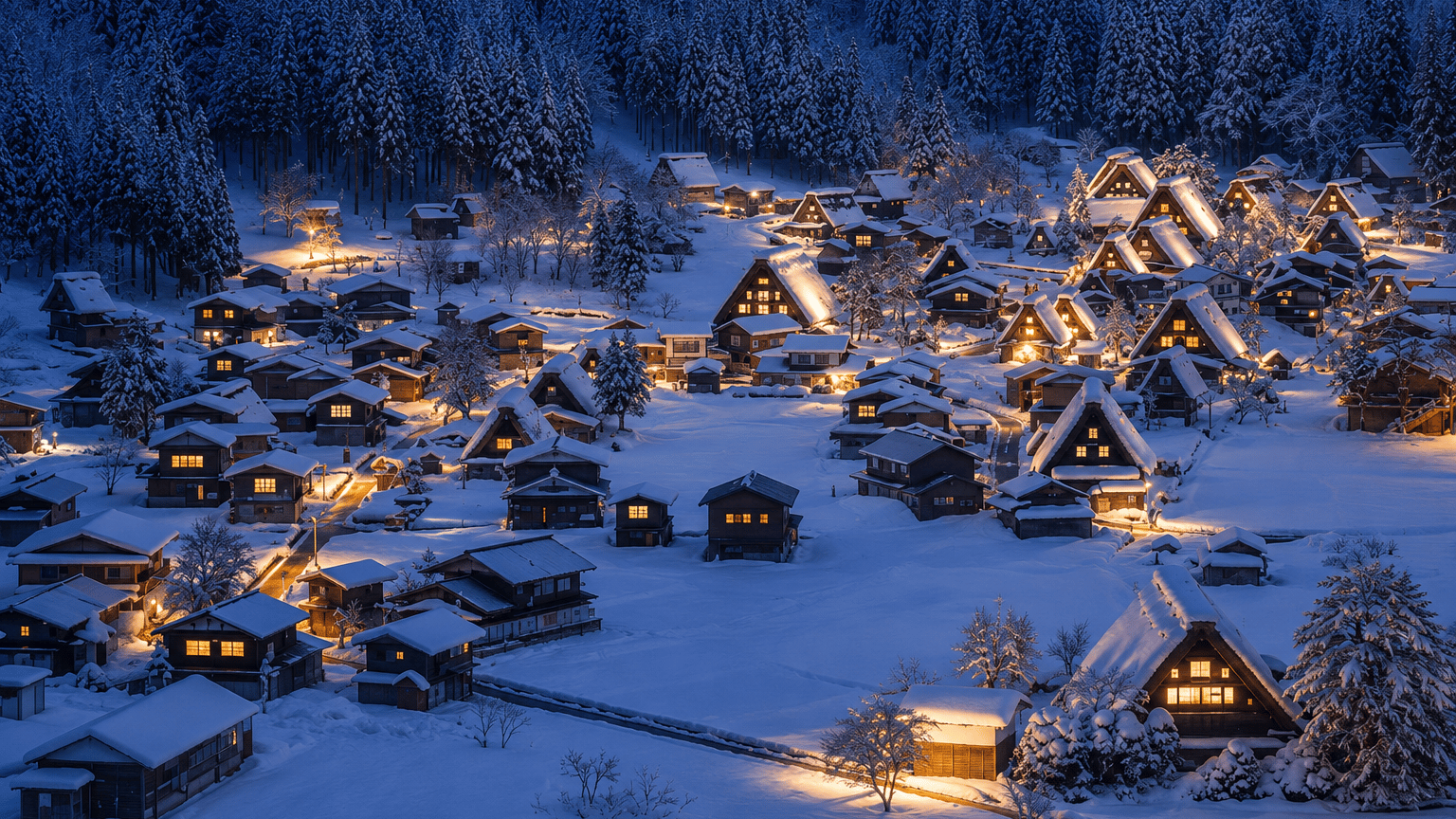
East Asia · Remote Settlement
Shirakawa-go
Japan
Shirakawa-go is strongest on Sustainability 8/10 — Large inhabited Gassho houses are purpose-adapted to severe snow and remain part of a functioning residential settlement with public water, sewerage, sanitation and local food preparation/production. This is a strong existing habitat for twenty people, though modern utilities and external supply remain relevant.. Its clearest scored constraint is Defensibility 2/10 — The historic village has restricted vehicle access, narrow internal lanes and a strong organised fire-response culture, but it remains an open civilian settlement without a continuous hardened perimeter. Twenty survivors could secure individual houses and lanes but not treat the whole village as a fortress..
Overall
4.7 out of 10Defensibility
2 out of 10Isolation
4 out of 10Sustainability
8 out of 10Ranking context
How this base ranks
Global
#56 of 91 · Top 61.54%
Region · East Asia
#2 of 5 · Top 40%
Base Type · Remote Settlement
#11 of 17 · Top 64.71%
Field assessment
At a glance
Bottom Line
For the fixed 20-person Base boundary, the most important endurance constraint is Resource Security 5/10 — Current public water infrastructure, explicitly documented mountain groundwater/spring drinking water, local rice and vegetable production and village commercial stocks cover several critical needs. Agricultural area and dietary diversity are limited, while electricity/fuel and many supplies remain external, so this is a strong mixed starting position rather than autonomy..
Biggest Trade-off
The central trade-off is the catalogue's strongest evidenced dimension, Sustainability at 8/10, against its weakest evidenced dimension, Defensibility at 2/10.
Most Likely Failure
The clearest evidenced failure pressure is Resource Security: Current public water infrastructure, explicitly documented mountain groundwater/spring drinking water, local rice and vegetable production and village commercial stocks cover several critical needs. Agricultural area and dietary diversity are limited, while electricity/fuel and many supplies remain external, so this is a strong mixed starting position rather than autonomy.
Score rationale
Why it scores this way
Defensibility · 2/10
The historic village has restricted vehicle access, narrow internal lanes and a strong organised fire-response culture, but it remains an open civilian settlement without a continuous hardened perimeter. Twenty survivors could secure individual houses and lanes but not treat the whole village as a fortress.
Advantages
- Positive credit is limited to what supports the Defensibility score of 2/10; the component rationale is: The historic village has restricted vehicle access, narrow internal lanes and a strong organised fire-response culture, but it remains an open civilian settlement without a continuous hardened perimeter. Twenty survivors could secure individual houses and lanes but not treat the whole village as a fortress.
Limitations
- Do not infer additional Defensibility capability outside the fixed Base boundary or beyond the recorded evidence.
Isolation · 4/10
The mountain valley, heavy winter snow and some weather-sensitive access provide noticeable separation, but the historic village sits only about ten minutes from an expressway interchange and has direct intercity bus services to several regional cities. The setting buys time without creating deep remoteness.
Advantages
- Positive credit is limited to what supports the Isolation score of 4/10; the component rationale is: The mountain valley, heavy winter snow and some weather-sensitive access provide noticeable separation, but the historic village sits only about ten minutes from an expressway interchange and has direct intercity bus services to several regional cities. The setting buys time without creating deep remoteness.
Limitations
- Do not infer additional Isolation capability outside the fixed Base boundary or beyond the recorded evidence.
Sustainability · 8/10
Large inhabited Gassho houses are purpose-adapted to severe snow and remain part of a functioning residential settlement with public water, sewerage, sanitation and local food preparation/production. This is a strong existing habitat for twenty people, though modern utilities and external supply remain relevant.
Advantages
- Positive credit is limited to what supports the Sustainability score of 8/10; the component rationale is: Large inhabited Gassho houses are purpose-adapted to severe snow and remain part of a functioning residential settlement with public water, sewerage, sanitation and local food preparation/production. This is a strong existing habitat for twenty people, though modern utilities and external supply remain relevant.
Limitations
- Do not infer additional Sustainability capability outside the fixed Base boundary or beyond the recorded evidence.
Survival horizons
How survival changes over time
First 7 days: current defence/contact profile
First 7 Days
This horizon does not invent future upgrades or resupply. It carries the current evaluated conditions forward and keeps unknown future capability uncredited.
Positive factors
- The stronger current condition in this horizon is Exposure Control 6/10 — Mountain-valley geography, restricted vehicle entry, external visitor parking and bridge-based pedestrian arrival materially shape final approaches and improve local observation/channeling. Multiple roads, houses and open agricultural edges prevent a few-route fortress score..
Risks
- The weaker current condition in this horizon is Defensibility 2/10 — The historic village has restricted vehicle access, narrow internal lanes and a strong organised fire-response culture, but it remains an open civilian settlement without a continuous hardened perimeter. Twenty survivors could secure individual houses and lanes but not treat the whole village as a fortress.; no better future state is assumed.
First 100 days: current habitat/capacity profile
First 100 Days
This horizon does not invent future upgrades or resupply. It carries the current evaluated conditions forward and keeps unknown future capability uncredited.
Positive factors
- The stronger current condition in this horizon is Sustainability 8/10 — Large inhabited Gassho houses are purpose-adapted to severe snow and remain part of a functioning residential settlement with public water, sewerage, sanitation and local food preparation/production. This is a strong existing habitat for twenty people, though modern utilities and external supply remain relevant..
Risks
- The weaker current condition in this horizon is Sustainability 8/10 — Large inhabited Gassho houses are purpose-adapted to severe snow and remain part of a functioning residential settlement with public water, sewerage, sanitation and local food preparation/production. This is a strong existing habitat for twenty people, though modern utilities and external supply remain relevant.; no better future state is assumed.
Long term: current resource/maintenance profile
Long Term
This horizon does not invent future upgrades or resupply. It carries the current evaluated conditions forward and keeps unknown future capability uncredited.
Positive factors
- The stronger current condition in this horizon is Maintenance Resilience 8/10 — Traditional construction knowledge remains actively resident-led, routine repairs use established local techniques/materials, and dedicated resident fire squads/extinguishing infrastructure protect highly combustible buildings. The settlement combines unusual community maintenance capability with relatively simple passive shelter systems, despite public utilities still needing upkeep..
Risks
- The weaker current condition in this horizon is Resource Security 5/10 — Current public water infrastructure, explicitly documented mountain groundwater/spring drinking water, local rice and vegetable production and village commercial stocks cover several critical needs. Agricultural area and dietary diversity are limited, while electricity/fuel and many supplies remain external, so this is a strong mixed starting position rather than autonomy.; no better future state is assumed.
Tactical assessment
Practical Reality
Reality Check
Scores apply only to the defined Base and exactly 20 capable adults. Unknown, excluded or external assets are not credited as hidden capability.
Best Use
Within the evaluated boundary, treat Sustainability as the primary operational strength; do not promote that score into capabilities the evidence does not establish.
Key Risk
Resource Security is the key evidenced long-duration risk: Current public water infrastructure, explicitly documented mountain groundwater/spring drinking water, local rice and vegetable production and village commercial stocks cover several critical needs. Agricultural area and dietary diversity are limited, while electricity/fuel and many supplies remain external, so this is a strong mixed starting position rather than autonomy.
Strengths
- One of the strongest scored dimensions is Sustainability 8/10 — Large inhabited Gassho houses are purpose-adapted to severe snow and remain part of a functioning residential settlement with public water, sewerage, sanitation and local food preparation/production. This is a strong existing habitat for twenty people, though modern utilities and external supply remain relevant..
- One of the strongest scored dimensions is Maintenance Resilience 8/10 — Traditional construction knowledge remains actively resident-led, routine repairs use established local techniques/materials, and dedicated resident fire squads/extinguishing infrastructure protect highly combustible buildings. The settlement combines unusual community maintenance capability with relatively simple passive shelter systems, despite public utilities still needing upkeep..
- One of the strongest scored dimensions is Population Capacity 8/10 — A living village of large multi-level houses, public sanitation and community infrastructure provides far more residential/support headroom than the fixed twenty-person group. The score stops below settlement-scale maximums because the canonical historic-village footprint is narrower than the whole municipality..
Weaknesses
- One of the weakest scored dimensions is Defensibility 2/10 — The historic village has restricted vehicle access, narrow internal lanes and a strong organised fire-response culture, but it remains an open civilian settlement without a continuous hardened perimeter. Twenty survivors could secure individual houses and lanes but not treat the whole village as a fortress..
- One of the weakest scored dimensions is Isolation 4/10 — The mountain valley, heavy winter snow and some weather-sensitive access provide noticeable separation, but the historic village sits only about ten minutes from an expressway interchange and has direct intercity bus services to several regional cities. The setting buys time without creating deep remoteness..
- One of the weakest scored dimensions is Resource Security 5/10 — Current public water infrastructure, explicitly documented mountain groundwater/spring drinking water, local rice and vegetable production and village commercial stocks cover several critical needs. Agricultural area and dietary diversity are limited, while electricity/fuel and many supplies remain external, so this is a strong mixed starting position rather than autonomy..
Assumptions / constraints
- Only assets inside the recorded Core Base and immediate operating boundary are credited; excluded surroundings and unproven future access remain outside the score.
Decision context
Rivals / Alternatives
Similar rival
Huilloc Village
Peru · Remote Settlement
Huilloc Village keeps the same remote settlement strategy, with only 0.0 points between the overall scores and closely matched defensibility pressure.
Overall 4.7/10
Strongest alternative
Isle of Eigg Village
United Kingdom · Remote Settlement
Isle of Eigg Village scores 6.3 overall versus 4.7, adding a stronger isolation profile while staying relevant as another remote settlement.
Overall 6.3/10
Wildcard rival
Fort Jefferson
United States · Fortified Structure
Fort Jefferson changes the strategy: it is a fortified structure with a defensibility edge, while Shirakawa-go holds more of the sustainability advantage.
Overall 6.7/10