Eastern Europe · Landmark Structure
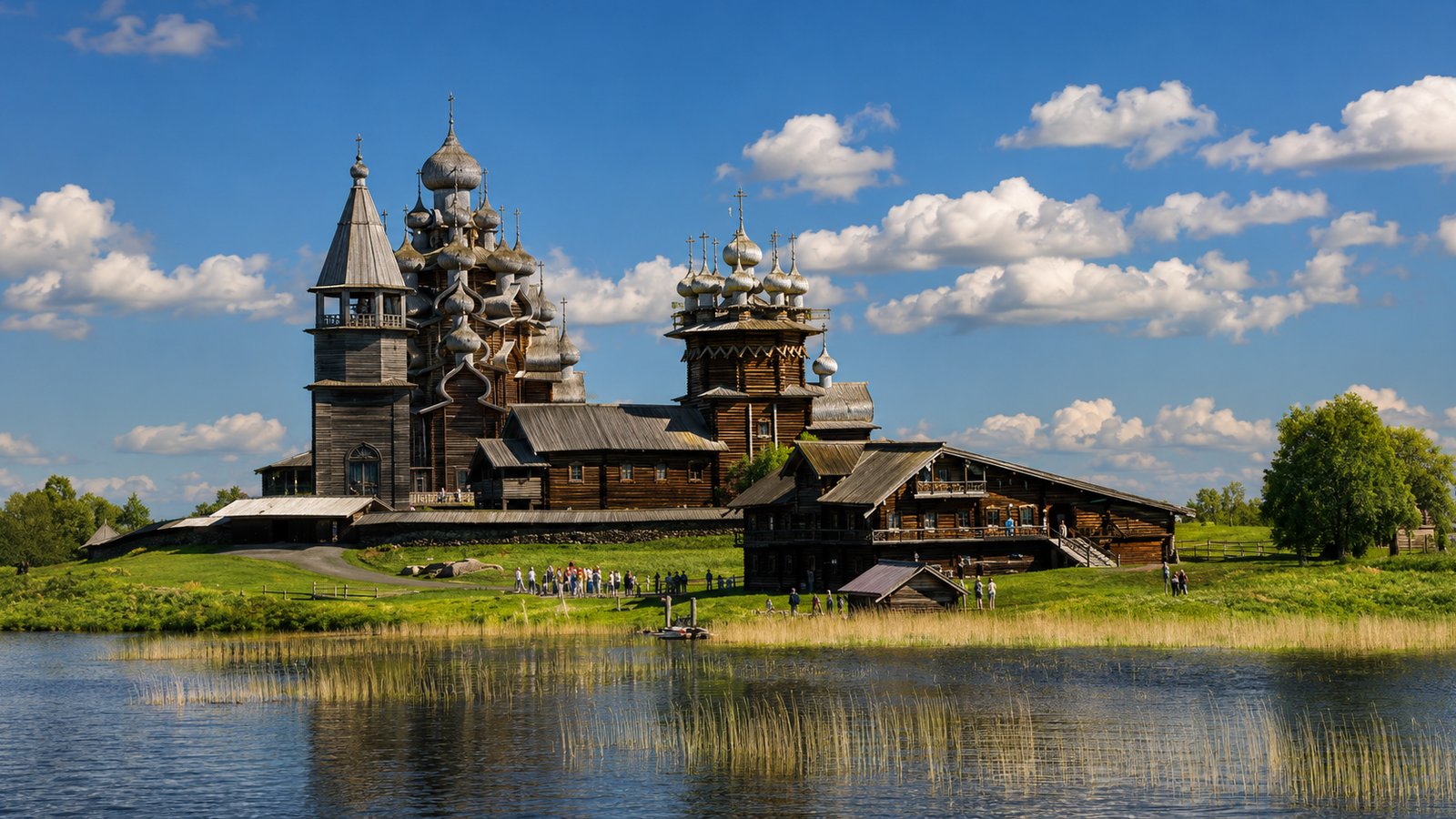
Kizhi Pogost
Russia
Kizhi Pogost is strongest on Isolation 6/10 — A narrow island-spit location provides substantial water separation, but Kizhi remains an established visitor destination with seasonal transport access.. Its clearest scored constraint is Resource Security 1/10 — The island/enclosure does not itself establish protected potable water, food production/storage or independent survival energy, while current fire protection underscores reliance on managed systems..
Overall
3.3 out of 10Defensibility
2 out of 10Isolation
6 out of 10Sustainability
2 out of 10Ranking context
How this base ranks
Global
#82 of 91 · Top 90.11%
Region · Eastern Europe
#10 of 10 · Top 100%
Base Type · Landmark Structure
#2 of 3 · Top 66.67%
Field assessment
At a glance
Bottom Line
For the fixed 20-person Base boundary, the most important endurance constraint is Resource Security 1/10 — The island/enclosure does not itself establish protected potable water, food production/storage or independent survival energy, while current fire protection underscores reliance on managed systems..
Biggest Trade-off
The central trade-off is the catalogue's strongest evidenced dimension, Isolation at 6/10, against its weakest evidenced dimension, Resource Security at 1/10.
Most Likely Failure
The evaluation leaves this material failure condition unresolved: No protected potable-water collection, treatment and storage pathway for twenty people is established inside the Pogost.
Score rationale
Why it scores this way
Defensibility · 2/10
The island setting and fence define a clear enclosure, but a heritage wooden fence is a weak barrier and the churches are not purpose-built defensive structures.
Advantages
- Positive credit is limited to what supports the Defensibility score of 2/10; the component rationale is: The island setting and fence define a clear enclosure, but a heritage wooden fence is a weak barrier and the churches are not purpose-built defensive structures.
Limitations
- Do not infer additional Defensibility capability outside the fixed Base boundary or beyond the recorded evidence.
Isolation · 6/10
A narrow island-spit location provides substantial water separation, but Kizhi remains an established visitor destination with seasonal transport access.
Advantages
- Positive credit is limited to what supports the Isolation score of 6/10; the component rationale is: A narrow island-spit location provides substantial water separation, but Kizhi remains an established visitor destination with seasonal transport access.
Limitations
- Do not infer additional Isolation capability outside the fixed Base boundary or beyond the recorded evidence.
Sustainability · 2/10
Large enclosed communal buildings provide basic shelter, but the churches are not evidenced as residential habitat with current sleeping, cooking, sanitation or medical support for twenty.
Advantages
- Positive credit is limited to what supports the Sustainability score of 2/10; the component rationale is: Large enclosed communal buildings provide basic shelter, but the churches are not evidenced as residential habitat with current sleeping, cooking, sanitation or medical support for twenty.
Limitations
- Do not infer additional Sustainability capability outside the fixed Base boundary or beyond the recorded evidence.
Survival horizons
How survival changes over time
First 7 days: current defence/contact profile
First 7 Days
This horizon does not invent future upgrades or resupply. It carries the current evaluated conditions forward and keeps unknown future capability uncredited.
Positive factors
- The stronger current condition in this horizon is Exposure Control 4/10 — The small fenced enclosure and island shoreline make local movement visible, but the fence is not a strong controlled barrier and visitor approaches remain open..
Risks
- The weaker current condition in this horizon is Defensibility 2/10 — The island setting and fence define a clear enclosure, but a heritage wooden fence is a weak barrier and the churches are not purpose-built defensive structures.; no better future state is assumed.
First 100 days: current habitat/capacity profile
First 100 Days
This horizon does not invent future upgrades or resupply. It carries the current evaluated conditions forward and keeps unknown future capability uncredited.
Positive factors
- The stronger current condition in this horizon is Population Capacity 4/10 — The churches and refectory provide enough enclosed physical space for twenty, but residential and sanitation throughput are unproven, limiting practical headroom..
Risks
- The weaker current condition in this horizon is Sustainability 2/10 — Large enclosed communal buildings provide basic shelter, but the churches are not evidenced as residential habitat with current sleeping, cooking, sanitation or medical support for twenty.; no better future state is assumed.
Long term: current resource/maintenance profile
Long Term
This horizon does not invent future upgrades or resupply. It carries the current evaluated conditions forward and keeps unknown future capability uncredited.
Positive factors
- The stronger current condition in this horizon is Maintenance Resilience 3/10 — Traditional timber construction remains usable through skilled conservation, but the current programme is meticulous and fire-protection dependent, showing meaningful ongoing maintenance burden..
Risks
- The weaker current condition in this horizon is Resource Security 1/10 — The island/enclosure does not itself establish protected potable water, food production/storage or independent survival energy, while current fire protection underscores reliance on managed systems.; no better future state is assumed.
Tactical assessment
Practical Reality
Reality Check
Scores apply only to the defined Base and exactly 20 capable adults. Unknown, excluded or external assets are not credited as hidden capability.
Best Use
Within the evaluated boundary, treat Isolation as the primary operational strength; do not promote that score into capabilities the evidence does not establish.
Key Risk
Resource Security is the key evidenced long-duration risk: The island/enclosure does not itself establish protected potable water, food production/storage or independent survival energy, while current fire protection underscores reliance on managed systems.
Strengths
- One of the strongest scored dimensions is Isolation 6/10 — A narrow island-spit location provides substantial water separation, but Kizhi remains an established visitor destination with seasonal transport access..
- One of the strongest scored dimensions is Exposure Control 4/10 — The small fenced enclosure and island shoreline make local movement visible, but the fence is not a strong controlled barrier and visitor approaches remain open..
- One of the strongest scored dimensions is Population Capacity 4/10 — The churches and refectory provide enough enclosed physical space for twenty, but residential and sanitation throughput are unproven, limiting practical headroom..
Weaknesses
- One of the weakest scored dimensions is Resource Security 1/10 — The island/enclosure does not itself establish protected potable water, food production/storage or independent survival energy, while current fire protection underscores reliance on managed systems..
- One of the weakest scored dimensions is Defensibility 2/10 — The island setting and fence define a clear enclosure, but a heritage wooden fence is a weak barrier and the churches are not purpose-built defensive structures..
- One of the weakest scored dimensions is Sustainability 2/10 — Large enclosed communal buildings provide basic shelter, but the churches are not evidenced as residential habitat with current sleeping, cooking, sanitation or medical support for twenty..
Assumptions / constraints
- Only assets inside the recorded Core Base and immediate operating boundary are credited; excluded surroundings and unproven future access remain outside the score.
Decision context
Rivals / Alternatives
Similar rival
Kolmanskop
Namibia · Remote Settlement
Kolmanskop keeps a close survival profile, with only 0.0 points between the overall scores and closely matched sustainability pressure.
Overall 3.3/10
Strongest alternative
Fastnet Lighthouse
Ireland · Landmark Structure
Fastnet Lighthouse scores 6.3 overall versus 3.3, adding a stronger defensibility profile while staying relevant as another landmark structure.
Overall 6.3/10
Wildcard rival
Amundsen-Scott South Pole Station
Antarctica · Institutional Compound
Amundsen-Scott South Pole Station changes the strategy: it is a institutional compound with a sustainability edge, while Kizhi Pogost has no headline-pillar edge in return.
Overall 7.7/10