Southeast Asia · Subterranean
Cu Chi Tunnels
Vietnam
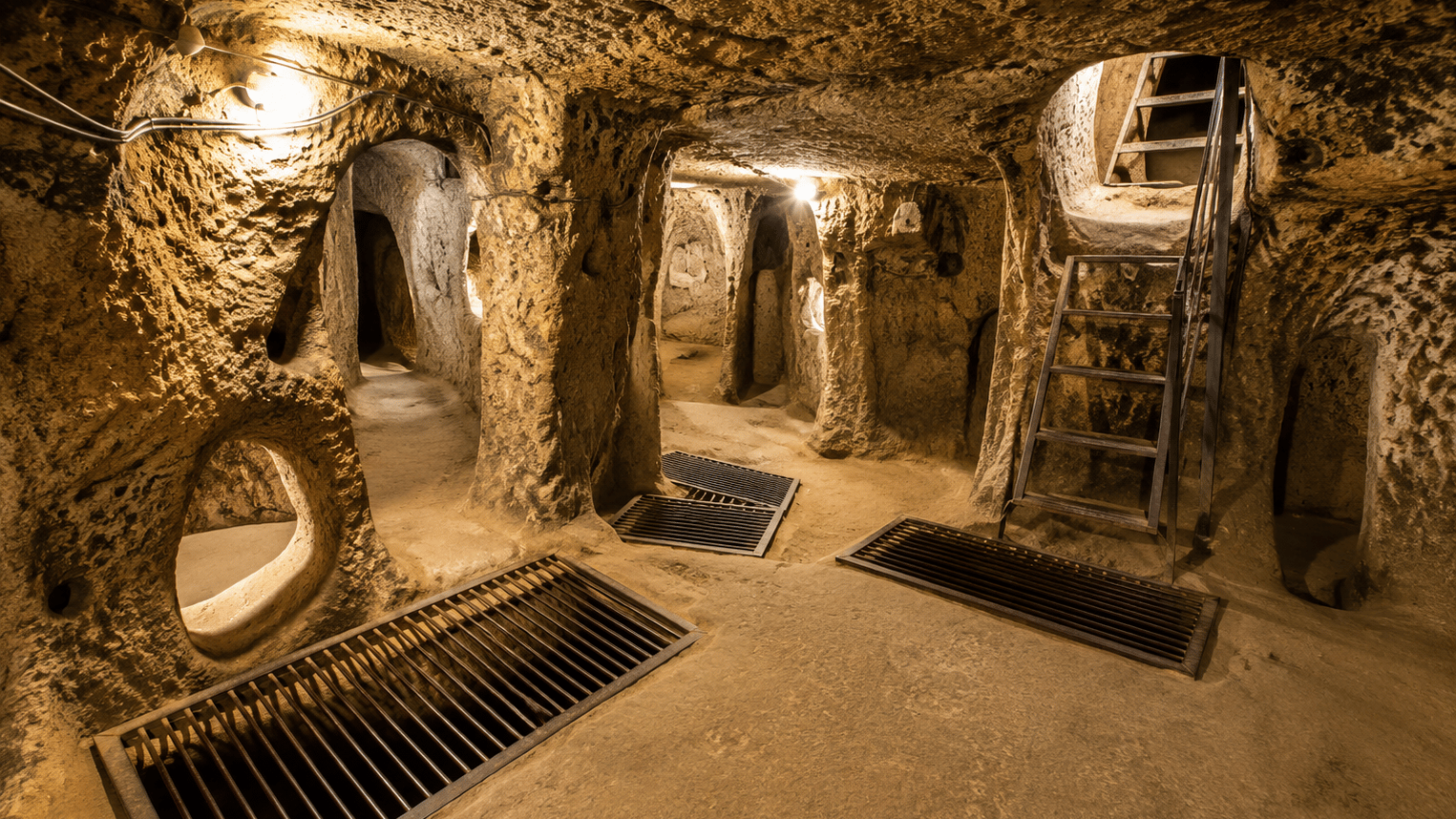
Cu Chi Tunnels is strongest on Exposure Control 8/10 — Concealed underground movement and narrow tunnel geometry strongly reduce line-of-sight exposure and funnel nearby threats through constrained passages/entrances. Public tourism access and uncertain present entrance closure geometry keep the site below the strongest controlled-network anchors.. Its clearest scored constraint is Isolation 3/10 — Ben Duoc lies well outside central Ho Chi Minh City and underground concealment limits local discovery, but Cu Chi is a populated, road-connected district on the metropolitan fringe. Concealment belongs to defence/exposure rather than geographic Isolation, so substantial nearby regional pressure remains..
Overall
4.7 out of 10Defensibility
7 out of 10Isolation
3 out of 10Sustainability
4 out of 10Ranking context
How this base ranks
Global
#48 of 91 · Top 52.75%
Region · Southeast Asia
#4 of 8 · Top 50%
Base Type · Subterranean
#7 of 12 · Top 58.33%
Field assessment
At a glance
Bottom Line
For the fixed 20-person Base boundary, the most important endurance constraint is Resource Security 3/10 — Physical wells, food-storage rooms and kitchens inside the tunnel network provide useful protected resource infrastructure. Current well potability/yield, stored food, working sanitation and survival-energy supplies are not established, while surrounding district resources remain outside the frozen Core Base..
Biggest Trade-off
The central trade-off is the catalogue's strongest evidenced dimension, Exposure Control at 8/10, against its weakest evidenced dimension, Isolation at 3/10.
Most Likely Failure
The evaluation leaves this material failure condition unresolved: Tunnel wells are directly evidenced, but present potability, yield and treatment are not. R3 credits the protected physical water infrastructure without asserting current potable independence.
Score rationale
Why it scores this way
Defensibility · 7/10
A dispersed underground maze with narrow passages, concealed entrances and multiple underground chambers provides strong passive protection, compartmentalisation and fallback potential. Current public visitor access and incomplete mapping of present controllable entrances prevent a higher fortress-class score.
Advantages
- Positive credit is limited to what supports the Defensibility score of 7/10; the component rationale is: A dispersed underground maze with narrow passages, concealed entrances and multiple underground chambers provides strong passive protection, compartmentalisation and fallback potential. Current public visitor access and incomplete mapping of present controllable entrances prevent a higher fortress-class score.
Limitations
- Do not infer additional Defensibility capability outside the fixed Base boundary or beyond the recorded evidence.
Isolation · 3/10
Ben Duoc lies well outside central Ho Chi Minh City and underground concealment limits local discovery, but Cu Chi is a populated, road-connected district on the metropolitan fringe. Concealment belongs to defence/exposure rather than geographic Isolation, so substantial nearby regional pressure remains.
Advantages
- Positive credit is limited to what supports the Isolation score of 3/10; the component rationale is: Ben Duoc lies well outside central Ho Chi Minh City and underground concealment limits local discovery, but Cu Chi is a populated, road-connected district on the metropolitan fringe. Concealment belongs to defence/exposure rather than geographic Isolation, so substantial nearby regional pressure remains.
Limitations
- Do not infer additional Isolation capability outside the fixed Base boundary or beyond the recorded evidence.
Sustainability · 4/10
The tunnel system physically includes sleeping, dining, medical, storage, well and kitchen spaces and remains sufficiently maintained for current visitor entry. Underground heat/humidity, cramped circulation and unresolved current sanitation/potable-water operation substantially compromise long-duration modern habitation.
Advantages
- Positive credit is limited to what supports the Sustainability score of 4/10; the component rationale is: The tunnel system physically includes sleeping, dining, medical, storage, well and kitchen spaces and remains sufficiently maintained for current visitor entry. Underground heat/humidity, cramped circulation and unresolved current sanitation/potable-water operation substantially compromise long-duration modern habitation.
Limitations
- Do not infer additional Sustainability capability outside the fixed Base boundary or beyond the recorded evidence.
Survival horizons
How survival changes over time
First 7 days: current defence/contact profile
First 7 Days
This horizon does not invent future upgrades or resupply. It carries the current evaluated conditions forward and keeps unknown future capability uncredited.
Positive factors
- The stronger current condition in this horizon is Exposure Control 8/10 — Concealed underground movement and narrow tunnel geometry strongly reduce line-of-sight exposure and funnel nearby threats through constrained passages/entrances. Public tourism access and uncertain present entrance closure geometry keep the site below the strongest controlled-network anchors..
Risks
- The weaker current condition in this horizon is Defensibility 7/10 — A dispersed underground maze with narrow passages, concealed entrances and multiple underground chambers provides strong passive protection, compartmentalisation and fallback potential. Current public visitor access and incomplete mapping of present controllable entrances prevent a higher fortress-class score.; no better future state is assumed.
First 100 days: current habitat/capacity profile
First 100 Days
This horizon does not invent future upgrades or resupply. It carries the current evaluated conditions forward and keeps unknown future capability uncredited.
Positive factors
- The stronger current condition in this horizon is Population Capacity 6/10 — The preserved system includes multiple living, dining, medical and storage chambers and historically supported a substantial underground community, making physical headroom for twenty credible. Current visitor-accessible extent, sleeping throughput and sanitation capacity are not established well enough for a higher score..
Risks
- The weaker current condition in this horizon is Sustainability 4/10 — The tunnel system physically includes sleeping, dining, medical, storage, well and kitchen spaces and remains sufficiently maintained for current visitor entry. Underground heat/humidity, cramped circulation and unresolved current sanitation/potable-water operation substantially compromise long-duration modern habitation.; no better future state is assumed.
Long term: current resource/maintenance profile
Long Term
This horizon does not invent future upgrades or resupply. It carries the current evaluated conditions forward and keeps unknown future capability uncredited.
Positive factors
- The stronger current condition in this horizon is Maintenance Resilience 6/10 — The core earth/tunnel shelter and many living/storage spaces are passive rather than dependent on complex machinery and have survived for decades. Tropical moisture, ventilation, drainage, structural inspection and preservation still need active maintenance, so the network is robust but not maintenance-free..
Risks
- The weaker current condition in this horizon is Resource Security 3/10 — Physical wells, food-storage rooms and kitchens inside the tunnel network provide useful protected resource infrastructure. Current well potability/yield, stored food, working sanitation and survival-energy supplies are not established, while surrounding district resources remain outside the frozen Core Base.; no better future state is assumed.
Tactical assessment
Practical Reality
Reality Check
Scores apply only to the defined Base and exactly 20 capable adults. Unknown, excluded or external assets are not credited as hidden capability.
Best Use
Within the evaluated boundary, treat Exposure Control as the primary operational strength; do not promote that score into capabilities the evidence does not establish.
Key Risk
Resource Security is the key evidenced long-duration risk: Physical wells, food-storage rooms and kitchens inside the tunnel network provide useful protected resource infrastructure. Current well potability/yield, stored food, working sanitation and survival-energy supplies are not established, while surrounding district resources remain outside the frozen Core Base.
Strengths
- One of the strongest scored dimensions is Exposure Control 8/10 — Concealed underground movement and narrow tunnel geometry strongly reduce line-of-sight exposure and funnel nearby threats through constrained passages/entrances. Public tourism access and uncertain present entrance closure geometry keep the site below the strongest controlled-network anchors..
- One of the strongest scored dimensions is Defensibility 7/10 — A dispersed underground maze with narrow passages, concealed entrances and multiple underground chambers provides strong passive protection, compartmentalisation and fallback potential. Current public visitor access and incomplete mapping of present controllable entrances prevent a higher fortress-class score..
- One of the strongest scored dimensions is Maintenance Resilience 6/10 — The core earth/tunnel shelter and many living/storage spaces are passive rather than dependent on complex machinery and have survived for decades. Tropical moisture, ventilation, drainage, structural inspection and preservation still need active maintenance, so the network is robust but not maintenance-free..
Weaknesses
- One of the weakest scored dimensions is Isolation 3/10 — Ben Duoc lies well outside central Ho Chi Minh City and underground concealment limits local discovery, but Cu Chi is a populated, road-connected district on the metropolitan fringe. Concealment belongs to defence/exposure rather than geographic Isolation, so substantial nearby regional pressure remains..
- One of the weakest scored dimensions is Resource Security 3/10 — Physical wells, food-storage rooms and kitchens inside the tunnel network provide useful protected resource infrastructure. Current well potability/yield, stored food, working sanitation and survival-energy supplies are not established, while surrounding district resources remain outside the frozen Core Base..
- One of the weakest scored dimensions is Sustainability 4/10 — The tunnel system physically includes sleeping, dining, medical, storage, well and kitchen spaces and remains sufficiently maintained for current visitor entry. Underground heat/humidity, cramped circulation and unresolved current sanitation/potable-water operation substantially compromise long-duration modern habitation..
Assumptions / constraints
- Only assets inside the recorded Core Base and immediate operating boundary are credited; excluded surroundings and unproven future access remain outside the score.
Decision context
Rivals / Alternatives
Similar rival
Derinkuyu Underground City
Turkey · Subterranean
Derinkuyu Underground City keeps the same subterranean strategy, with only 0.3 points between the overall scores and closely matched defensibility pressure.
Overall 4.3/10
Strongest alternative
Olavsvern Naval Base
Norway · Subterranean
Olavsvern Naval Base scores 6.3 overall versus 4.7, adding a stronger sustainability profile while staying relevant as another subterranean.
Overall 6.3/10
Wildcard rival
Amundsen-Scott South Pole Station
Antarctica · Institutional Compound
Amundsen-Scott South Pole Station changes the strategy: it is a institutional compound with a isolation edge, while Cu Chi Tunnels holds more of the defensibility advantage.
Overall 7.7/10