North America · Fortified Structure
Alcatraz Island
United States
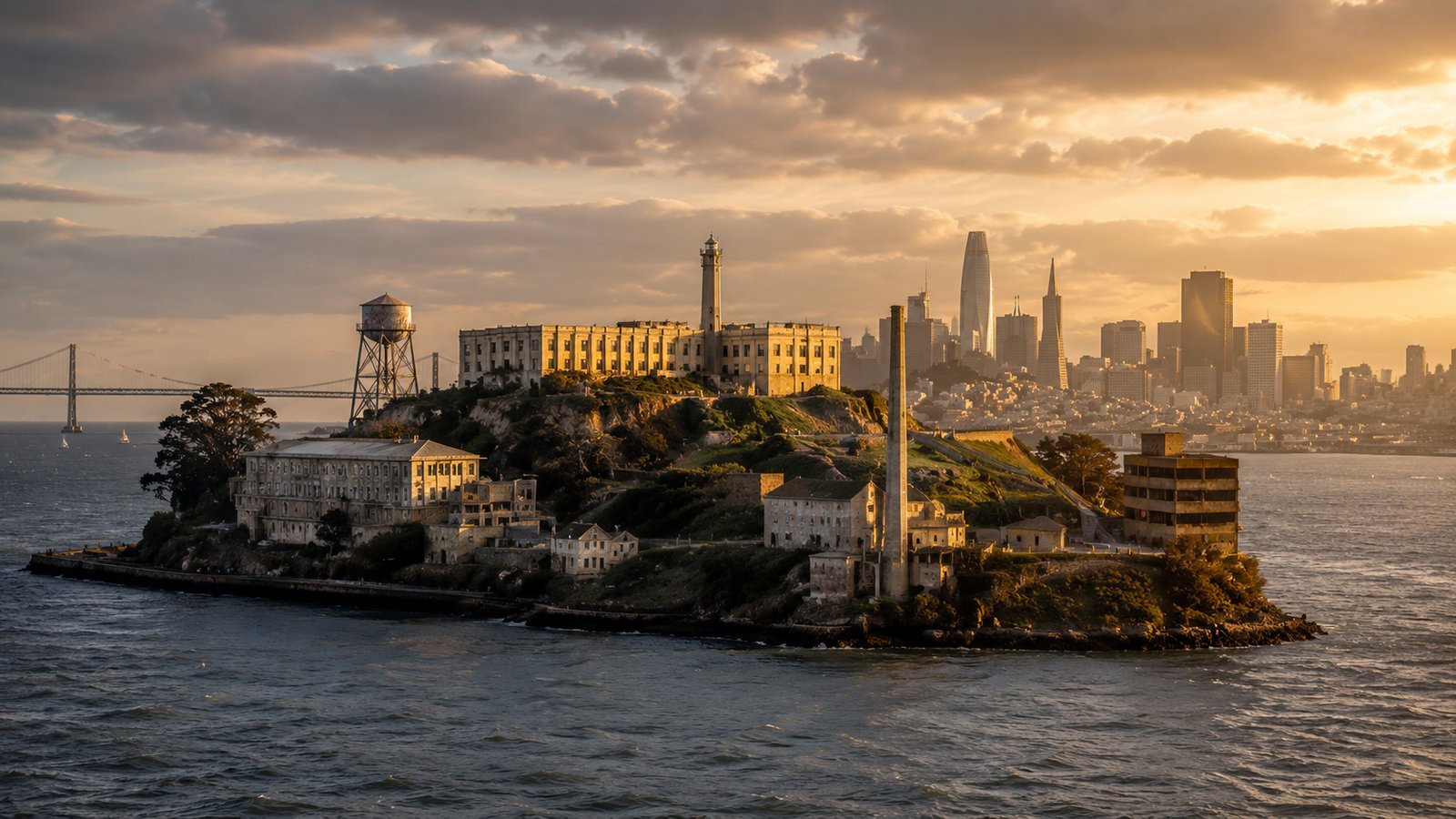
Alcatraz combines a water perimeter, steep shoreline and a massive Cellhouse with strong approach control, but long-term survival is constrained by imported drinking water, fuel, food and mainland-dependent waste handling.
Overall
6 out of 10Defensibility
7 out of 10Isolation
6 out of 10Sustainability
5 out of 10Ranking context
How this base ranks
Global
#11 of 91 · Top 12.09%
Region · North America
#2 of 9 · Top 22.22%
Base Type · Fortified Structure
#6 of 18 · Top 33.33%
Field assessment
At a glance
Bottom Line
A strong defensive refuge with ample shelter for twenty people, but only a short-to-medium-term resource position unless the island's external water and supply dependence is replaced.
Biggest Trade-off
Excellent physical containment and huge institutional shelter versus weak independent water, fuel, food and waste continuity.
Most Likely Failure
The group remains physically secure but exhausts imported water, fuel or food and loses waste-handling capacity faster than it can create independent replacements.
Score rationale
Why it scores this way
Defensibility · 7/10
Alcatraz has strong passive protection from water, cliffs and a massive institutional structure, though it is not a compact modern hardened compound.
Advantages
- The island and Cellhouse create multiple layers of physical separation before an attacker reaches occupied interior space.
Limitations
- Degraded heritage structures and a larger island footprint prevent the site from reaching the most failure-tolerant fortress classes.
Isolation · 6/10
The Bay blocks ordinary ground approach, but Alcatraz sits beside a very large metropolitan population rather than in true geographic remoteness.
Advantages
- There is no land connection, so ordinary walker pressure cannot simply flow onto the island.
Limitations
- San Francisco and Oakland place substantial population pressure immediately around the wider operating environment.
Sustainability · 5/10
The island offers extensive shelter and current utilities, but prolonged occupation is constrained by externally supplied water, fuel, food and waste handling.
Advantages
- The Cellhouse provides abundant protected rooms, circulation and former institutional support areas for a twenty-person group.
Limitations
- Current habitability relies on resource and waste chains that do not originate on the island.
Survival horizons
How survival changes over time
Strong immediate refuge
First 7 Days
The island's controlled approaches, existing shelter and functioning utilities give twenty survivors a strong short-term starting position.
Positive factors
- The Cellhouse provides immediate protected space with substantial spare capacity.
Risks
- The group must inventory imported water, fuel and food immediately because those supplies are not self-renewing on site.
Supply dependency dominates
First 100 Days
The defensive picture stays strong while water, fuel, food and waste continuity become the controlling survival problems.
Positive factors
- Passive structures and mixed solar-battery-diesel power can retain useful function while stored inputs remain available.
Risks
- Without an independent potable-water and food pathway, the island's resource position degrades sharply as mainland logistics disappear.
Defensible but resource-limited
Long Term
Long-term viability depends on replacing external water, food, fuel and waste systems rather than on adding more defensive structure.
Positive factors
- The built footprint gives ample space to simplify occupation and concentrate maintenance on a small core.
Risks
- The island does not currently demonstrate durable independent replenishment of its most critical survival resources.
Tactical assessment
Practical Reality
Reality Check
Alcatraz is not scored as an operating prison or military post. V2 uses the surviving island structures and current systems without inheriting historic staff, weapons or mainland logistics.
Best Use
Concentrate the group around the Cellhouse and dock approach, exploiting the island's channelled access while preserving stored water and power for essential use.
Key Risk
Mainland-linked water, fuel, food and sewage systems fail before the island's defensive advantages can translate into durable self-sufficiency.
Strengths
- Water separation, cliffs and a channelled dock-to-Cellhouse approach provide strong passive access control.
- The reinforced Cellhouse and institutional support footprint provide far more sheltered space than twenty survivors require.
- Current solar, battery and diesel infrastructure provides a useful starting electrical system with some redundancy.
Weaknesses
- Drinking water and diesel are currently imported rather than generated as durable island resources.
- Meaningful food provisioning is external and sewage handling depends on mainland support.
- Aging structures remain under active preservation, adding maintenance burden to an otherwise durable site.
Assumptions / constraints
- The fixed twenty-person group may use existing island infrastructure but does not inherit NPS logistics, ferries or historic prison manpower as guaranteed survival assets.
Decision context
Rivals / Alternatives
Similar rival
Fort Jefferson
United States · Fortified Structure
Fort Jefferson keeps the same fortified structure strategy, with only 0.7 points between the overall scores and closely matched isolation pressure.
Overall 6.7/10
Strongest alternative
Fort George
United Kingdom · Fortified Structure
Fort George scores 6.7 overall versus 6.0, adding a stronger sustainability profile while staying relevant as another fortified structure.
Overall 6.7/10
Wildcard rival
Great Mosque of Djenné
Mali · Landmark Structure
Great Mosque of Djenné changes the strategy: it is a landmark structure without a headline-pillar edge over Alcatraz Island, while Alcatraz Island holds more of the isolation advantage.
Overall 1.3/10