Western Europe · Fortified Structure
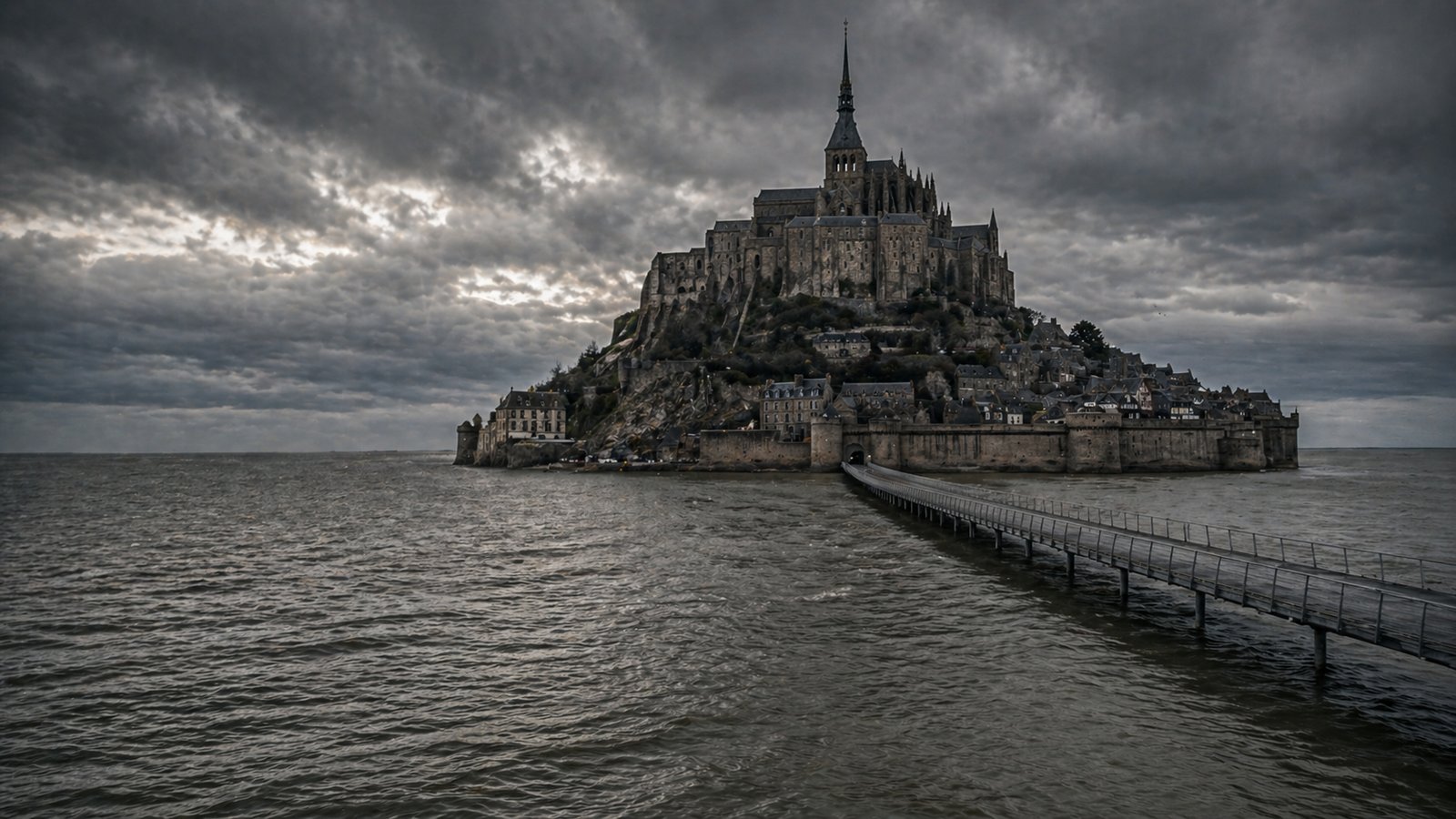
Mont Saint-Michel
France
Mont Saint-Michel is a formidable compact fortress whose walls, height and tidal approaches strongly shape contact, but year-round bridge access and dependence on mainland water and food systems keep it from being the near-isolated sanctuary its appearance suggests.
Overall
6.3 out of 10Defensibility
8 out of 10Isolation
5 out of 10Sustainability
6 out of 10Ranking context
How this base ranks
Global
#8 of 91 · Top 8.79%
Region · Western Europe
#2 of 9 · Top 22.22%
Base Type · Fortified Structure
#4 of 18 · Top 22.22%
Field assessment
At a glance
Bottom Line
An excellent place to hold, but a much harder place to supply indefinitely.
Biggest Trade-off
Strong passive defence and approach control versus only moderate isolation and weak long-term resource independence.
Most Likely Failure
Resource exhaustion and utility loss erode habitability before direct walker pressure defeats the walls.
Score rationale
Why it scores this way
Defensibility · 8/10
Historic walls, steep terrain and constrained entry make the Mont a very strong defensive position, though not a modern compartmentalised bunker.
Advantages
- The occupied village benefits from walls, elevation and a steep rocky islet.
Limitations
- Heritage fabric and low-tide perimeter exposure prevent treating the whole position as a sealed engineered fortress.
Isolation · 5/10
Tidal geography creates meaningful separation, but normal bridge access keeps the Mont in the middle isolation classes rather than the remote-island tier.
Advantages
- Exceptional high tides can temporarily restore full water separation around the rock.
Limitations
- A 2.2 km bridge ordinarily provides year-round connection to the mainland.
Sustainability · 6/10
The Mont is a proven inhabited settlement with accommodation and services, but its critical utility and food systems remain externally dependent.
Advantages
- Current housing, sanitation, water service and food-preparation infrastructure support long-duration habitation.
Limitations
- External water networks and lack of evidenced internal food production limit independent endurance.
Survival horizons
How survival changes over time
Strong defensive redoubt
First 7 Days
The walls, elevation and visible approach routes provide a strong immediate position while existing accommodation and services support the group.
Positive factors
- Approaches are exposed and channelled enough for a small organised group to observe them effectively.
Risks
- The bridge remains a normal access route and must be managed rather than assumed absent.
Supply dependence emerges
First 100 Days
As normal networks degrade, water, food and wastewater dependencies become more important than the initial strength of the walls.
Positive factors
- Existing accommodation and sanitation give a strong starting habitat.
Risks
- External utility and food dependence can erode habitability without a direct attack.
Fortress needs an external resource plan
Long Term
The Mont remains physically strong, but long-term viability requires dependable resource renewal beyond the compact Core Base.
Positive factors
- Passive stone fortifications retain value even as modern systems degrade.
Risks
- The current evidence does not establish internal renewable food or independent primary water production.
Tactical assessment
Practical Reality
Reality Check
The Mont is periodically an island, not a permanently cut-off one: the bridge normally provides year-round access and exceptional tides interrupt it only briefly.
Best Use
A compact defended redoubt for a small group that controls the bridge and treats mainland supply as an external dependency rather than part of the Base.
Key Risk
Loss of external water or food supply while the group remains concentrated in a compact site with little internal production.
Strengths
- Steep rocky terrain and substantial historic walls provide a strong passive defensive position.
- The long bridge, tidal flats and elevation make ordinary approaches visible and strongly channelled.
- Existing accommodation, sanitation and food-preparation facilities show real habitat capacity for the reference group.
Weaknesses
- The year-round bridge means the Mont is separated but not truly remote.
- Potable water and wastewater services currently depend on external networked infrastructure.
- No durable internal food-production pathway is established by the current evidence.
Assumptions / constraints
- Mainland farms, utilities and visitor facilities remain outside the Base unless physically controlled and integrated into the operating unit.
Decision context
Rivals / Alternatives
Similar rival
Carcassonne
France · Fortified Structure
Carcassonne keeps the same fortified structure strategy, with only 0.7 points between the overall scores and closely matched sustainability pressure.
Overall 5.7/10
Strongest alternative
Fort George
United Kingdom · Fortified Structure
Fort George scores 6.7 overall versus 6.3, adding a stronger sustainability profile while staying relevant as another fortified structure.
Overall 6.7/10
Wildcard rival
Great Mosque of Djenné
Mali · Landmark Structure
Great Mosque of Djenné changes the strategy: it is a landmark structure without a headline-pillar edge over Mont Saint-Michel, while Mont Saint-Michel holds more of the defensibility advantage.
Overall 1.3/10