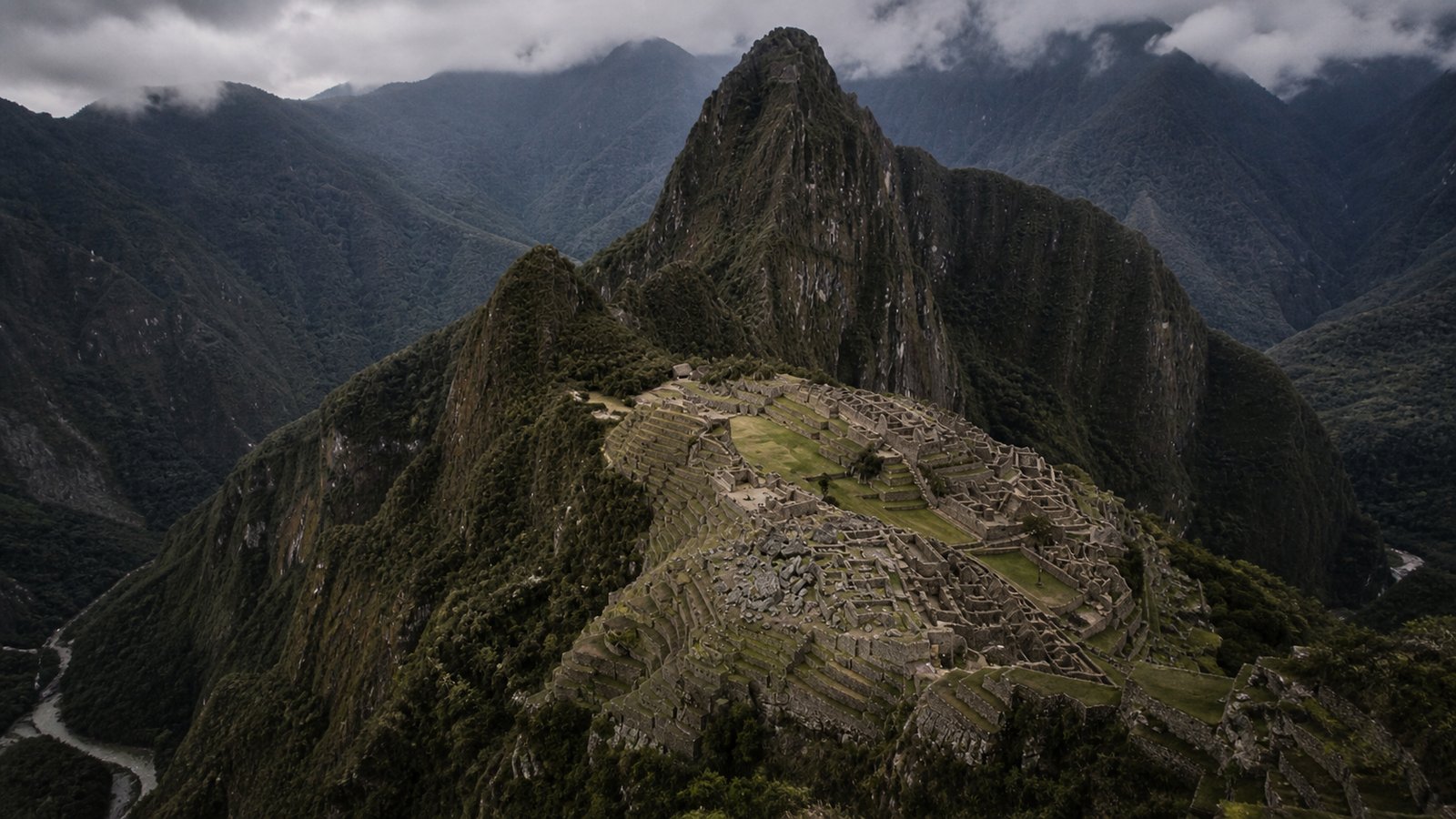
South America · Elevated Stronghold
Machu Picchu
Peru
Machu Picchu is strongest on Isolation 7/10 — The sanctuary occupies rugged high-Andean terrain with substantial separation from ordinary urban pressure and controlled route access. Established rail/bus/trail tourism and nearby Machupicchu Pueblo prevent the extreme-isolation classes.. Its clearest scored constraint is Resource Security 3/10 — Current potable water and electricity at the complex entrance plus historic channels/terraces provide useful infrastructure. No current internal food production, protected water storage/treatment independence or survival-energy continuity is established; Aguas Calientes and tourism logistics remain outside the Base..
Overall
5 out of 10Defensibility
4 out of 10Isolation
7 out of 10Sustainability
4 out of 10Ranking context
How this base ranks
Global
#39 of 91 · Top 42.86%
Region · South America
#4 of 8 · Top 50%
Base Type · Elevated Stronghold
#4 of 13 · Top 30.77%
Field assessment
At a glance
Bottom Line
For the fixed 20-person Base boundary, the most important endurance constraint is Resource Security 3/10 — Current potable water and electricity at the complex entrance plus historic channels/terraces provide useful infrastructure. No current internal food production, protected water storage/treatment independence or survival-energy continuity is established; Aguas Calientes and tourism logistics remain outside the Base..
Biggest Trade-off
The central trade-off is the catalogue's strongest evidenced dimension, Isolation at 7/10, against its weakest evidenced dimension, Resource Security at 3/10.
Most Likely Failure
The clearest evidenced failure pressure is Resource Security: Current potable water and electricity at the complex entrance plus historic channels/terraces provide useful infrastructure. No current internal food production, protected water storage/treatment independence or survival-energy continuity is established; Aguas Calientes and tourism logistics remain outside the Base.
Score rationale
Why it scores this way
Defensibility · 4/10
Steep ridge terrain, stone walls and constrained paths create genuine defensive advantages, but the archaeological settlement lacks an evidenced continuous fortified perimeter, modern gates, internal defensive depth or reliable breach containment for twenty people.
Advantages
- Positive credit is limited to what supports the Defensibility score of 4/10; the component rationale is: Steep ridge terrain, stone walls and constrained paths create genuine defensive advantages, but the archaeological settlement lacks an evidenced continuous fortified perimeter, modern gates, internal defensive depth or reliable breach containment for twenty people.
Limitations
- Do not infer additional Defensibility capability outside the fixed Base boundary or beyond the recorded evidence.
Isolation · 7/10
The sanctuary occupies rugged high-Andean terrain with substantial separation from ordinary urban pressure and controlled route access. Established rail/bus/trail tourism and nearby Machupicchu Pueblo prevent the extreme-isolation classes.
Advantages
- Positive credit is limited to what supports the Isolation score of 7/10; the component rationale is: The sanctuary occupies rugged high-Andean terrain with substantial separation from ordinary urban pressure and controlled route access. Established rail/bus/trail tourism and nearby Machupicchu Pueblo prevent the extreme-isolation classes.
Limitations
- Do not infer additional Isolation capability outside the fixed Base boundary or beyond the recorded evidence.
Sustainability · 4/10
The large archaeological settlement provides abundant stone structures, terraces, circulation space, potable water/electric service at the entrance and managed hygienic-service infrastructure. Most surviving buildings are not modern weather-tight residential accommodation, and current cooking, sleeping and long-duration hygiene arrangements for twenty would be materially compromised without adaptation.
Advantages
- Positive credit is limited to what supports the Sustainability score of 4/10; the component rationale is: The large archaeological settlement provides abundant stone structures, terraces, circulation space, potable water/electric service at the entrance and managed hygienic-service infrastructure. Most surviving buildings are not modern weather-tight residential accommodation, and current cooking, sleeping and long-duration hygiene arrangements for twenty would be materially compromised without adaptation.
Limitations
- Do not infer additional Sustainability capability outside the fixed Base boundary or beyond the recorded evidence.
Survival horizons
How survival changes over time
First 7 days: current defence/contact profile
First 7 Days
This horizon does not invent future upgrades or resupply. It carries the current evaluated conditions forward and keeps unknown future capability uncredited.
Positive factors
- The stronger current condition in this horizon is Exposure Control 7/10 — Steep terrain and a limited ridge/trail access network strongly shape movement and provide substantial warning. Multiple paths, archaeological sectors and vegetated blind ground leave meaningful monitoring burden, preventing a tighter few-route score..
Risks
- The weaker current condition in this horizon is Defensibility 4/10 — Steep ridge terrain, stone walls and constrained paths create genuine defensive advantages, but the archaeological settlement lacks an evidenced continuous fortified perimeter, modern gates, internal defensive depth or reliable breach containment for twenty people.; no better future state is assumed.
First 100 days: current habitat/capacity profile
First 100 Days
This horizon does not invent future upgrades or resupply. It carries the current evaluated conditions forward and keeps unknown future capability uncredited.
Positive factors
- The stronger current condition in this horizon is Population Capacity 6/10 — Roughly 200 structures, extensive terraces/circulation and current visitor throughput above four thousand per day establish enormous physical space and managed service capacity compared with twenty people. Lack of modern sheltered sleeping/residential facilities prevents settlement-scale residential credit..
Risks
- The weaker current condition in this horizon is Sustainability 4/10 — The large archaeological settlement provides abundant stone structures, terraces, circulation space, potable water/electric service at the entrance and managed hygienic-service infrastructure. Most surviving buildings are not modern weather-tight residential accommodation, and current cooking, sleeping and long-duration hygiene arrangements for twenty would be materially compromised without adaptation.; no better future state is assumed.
Long term: current resource/maintenance profile
Long Term
This horizon does not invent future upgrades or resupply. It carries the current evaluated conditions forward and keeps unknown future capability uncredited.
Positive factors
- The stronger current condition in this horizon is Maintenance Resilience 5/10 — Core stone terraces, paths, walls and gravity water-channel fabric retain passive value, while current utility and sanitation infrastructure adds capability. Heavy rain and landslide/access damage require recurring conservation/route rehabilitation, and modern service systems remain technically dependent..
Risks
- The weaker current condition in this horizon is Resource Security 3/10 — Current potable water and electricity at the complex entrance plus historic channels/terraces provide useful infrastructure. No current internal food production, protected water storage/treatment independence or survival-energy continuity is established; Aguas Calientes and tourism logistics remain outside the Base.; no better future state is assumed.
Tactical assessment
Practical Reality
Reality Check
Scores apply only to the defined Base and exactly 20 capable adults. Unknown, excluded or external assets are not credited as hidden capability.
Best Use
Within the evaluated boundary, treat Isolation as the primary operational strength; do not promote that score into capabilities the evidence does not establish.
Key Risk
Resource Security is the key evidenced long-duration risk: Current potable water and electricity at the complex entrance plus historic channels/terraces provide useful infrastructure. No current internal food production, protected water storage/treatment independence or survival-energy continuity is established; Aguas Calientes and tourism logistics remain outside the Base.
Strengths
- One of the strongest scored dimensions is Isolation 7/10 — The sanctuary occupies rugged high-Andean terrain with substantial separation from ordinary urban pressure and controlled route access. Established rail/bus/trail tourism and nearby Machupicchu Pueblo prevent the extreme-isolation classes..
- One of the strongest scored dimensions is Exposure Control 7/10 — Steep terrain and a limited ridge/trail access network strongly shape movement and provide substantial warning. Multiple paths, archaeological sectors and vegetated blind ground leave meaningful monitoring burden, preventing a tighter few-route score..
- One of the strongest scored dimensions is Population Capacity 6/10 — Roughly 200 structures, extensive terraces/circulation and current visitor throughput above four thousand per day establish enormous physical space and managed service capacity compared with twenty people. Lack of modern sheltered sleeping/residential facilities prevents settlement-scale residential credit..
Weaknesses
- One of the weakest scored dimensions is Resource Security 3/10 — Current potable water and electricity at the complex entrance plus historic channels/terraces provide useful infrastructure. No current internal food production, protected water storage/treatment independence or survival-energy continuity is established; Aguas Calientes and tourism logistics remain outside the Base..
- One of the weakest scored dimensions is Defensibility 4/10 — Steep ridge terrain, stone walls and constrained paths create genuine defensive advantages, but the archaeological settlement lacks an evidenced continuous fortified perimeter, modern gates, internal defensive depth or reliable breach containment for twenty people..
- One of the weakest scored dimensions is Sustainability 4/10 — The large archaeological settlement provides abundant stone structures, terraces, circulation space, potable water/electric service at the entrance and managed hygienic-service infrastructure. Most surviving buildings are not modern weather-tight residential accommodation, and current cooking, sleeping and long-duration hygiene arrangements for twenty would be materially compromised without adaptation..
Assumptions / constraints
- Only assets inside the recorded Core Base and immediate operating boundary are credited; excluded surroundings and unproven future access remain outside the score.
Decision context
Rivals / Alternatives
Similar rival
Tiger’s Nest Monastery
Bhutan · Elevated Stronghold
Tiger’s Nest Monastery keeps the same elevated stronghold strategy, with only 0.3 points between the overall scores and closely matched defensibility pressure.
Overall 4.7/10
Strongest alternative
Amundsen-Scott South Pole Station
Antarctica · Institutional Compound
Amundsen-Scott South Pole Station scores 7.7 overall versus 5.0, adding a stronger sustainability profile while staying relevant as a comparable survival plan.
Overall 7.7/10
Wildcard rival
Okinawa
Japan · Isolated Landmass
Okinawa changes the strategy: it is a isolated landmass with a sustainability edge, while Machu Picchu holds more of the isolation advantage.
Overall 3.7/10