UK & Ireland · Subterranean
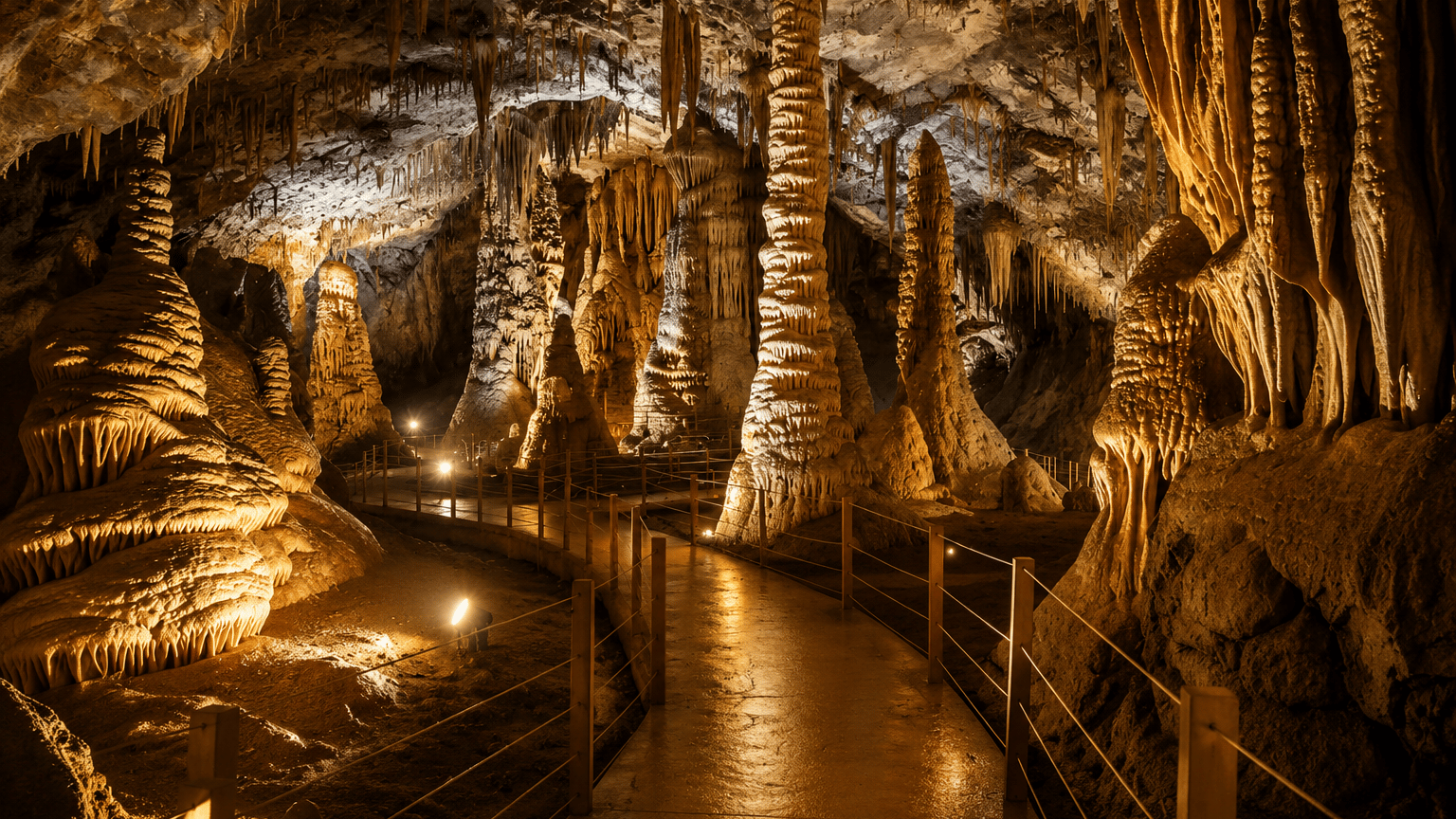
Cheddar Gorge Caves
United Kingdom
Cheddar Gorge Caves is strongest on Defensibility 5/10 — Rock cave chambers and controlled visitor portals offer useful passive protection and constrained access, but the attraction is not a fortified installation and the canonical complex has multiple public-facing components rather than one deep fallback position.. Its clearest scored constraint is Isolation 1/10 — The caves are a major public attraction directly associated with Cheddar village and normal road/coach access. Underground chambers create local physical separation but almost no regional population isolation..
Overall
3 out of 10Defensibility
5 out of 10Isolation
1 out of 10Sustainability
3 out of 10Ranking context
How this base ranks
Global
#87 of 91 · Top 95.6%
Region · UK & Ireland
#10 of 11 · Top 90.91%
Base Type · Subterranean
#12 of 12 · Top 100%
Field assessment
At a glance
Bottom Line
For the fixed 20-person Base boundary, the most important endurance constraint is Resource Security 2/10 — The integrated cafe gives an actual supplied food/drink starting inventory, while the attraction is embedded in normal village logistics. No independent protected potable-water production/storage, durable food source or autonomous survival-energy pathway within the cave complex is established..
Biggest Trade-off
The central trade-off is the catalogue's strongest evidenced dimension, Defensibility at 5/10, against its weakest evidenced dimension, Isolation at 1/10.
Most Likely Failure
The evaluation leaves this material failure condition unresolved: Current drinks and visitor services are evidenced, but an independent protected potable-water source/storage/treatment pathway inside the cave complex is not. R2 credits immediate supplied stock only.
Score rationale
Why it scores this way
Defensibility · 5/10
Rock cave chambers and controlled visitor portals offer useful passive protection and constrained access, but the attraction is not a fortified installation and the canonical complex has multiple public-facing components rather than one deep fallback position.
Advantages
- Positive credit is limited to what supports the Defensibility score of 5/10; the component rationale is: Rock cave chambers and controlled visitor portals offer useful passive protection and constrained access, but the attraction is not a fortified installation and the canonical complex has multiple public-facing components rather than one deep fallback position.
Limitations
- Do not infer additional Defensibility capability outside the fixed Base boundary or beyond the recorded evidence.
Isolation · 1/10
The caves are a major public attraction directly associated with Cheddar village and normal road/coach access. Underground chambers create local physical separation but almost no regional population isolation.
Advantages
- Positive credit is limited to what supports the Isolation score of 1/10; the component rationale is: The caves are a major public attraction directly associated with Cheddar village and normal road/coach access. Underground chambers create local physical separation but almost no regional population isolation.
Limitations
- Do not infer additional Isolation capability outside the fixed Base boundary or beyond the recorded evidence.
Sustainability · 3/10
Stable-temperature cave shelter, integrated indoor cafe/service space and large daytime visitor throughput provide a viable emergency starting shell. The complex is explicitly day-use, with no current residential sleeping system or proven independent long-duration sanitation, so habitat quality remains low.
Advantages
- Positive credit is limited to what supports the Sustainability score of 3/10; the component rationale is: Stable-temperature cave shelter, integrated indoor cafe/service space and large daytime visitor throughput provide a viable emergency starting shell. The complex is explicitly day-use, with no current residential sleeping system or proven independent long-duration sanitation, so habitat quality remains low.
Limitations
- Do not infer additional Sustainability capability outside the fixed Base boundary or beyond the recorded evidence.
Survival horizons
How survival changes over time
First 7 days: current defence/contact profile
First 7 Days
This horizon does not invent future upgrades or resupply. It carries the current evaluated conditions forward and keeps unknown future capability uncredited.
Positive factors
- The stronger current condition in this horizon is Defensibility 5/10 — Rock cave chambers and controlled visitor portals offer useful passive protection and constrained access, but the attraction is not a fortified installation and the canonical complex has multiple public-facing components rather than one deep fallback position..
Risks
- The weaker current condition in this horizon is Defensibility 5/10 — Rock cave chambers and controlled visitor portals offer useful passive protection and constrained access, but the attraction is not a fortified installation and the canonical complex has multiple public-facing components rather than one deep fallback position.; no better future state is assumed.
First 100 days: current habitat/capacity profile
First 100 Days
This horizon does not invent future upgrades or resupply. It carries the current evaluated conditions forward and keeps unknown future capability uncredited.
Positive factors
- The stronger current condition in this horizon is Population Capacity 4/10 — Current group operation clearly handles more than twenty people and provides substantial circulation/indoor cave volume. Lack of beds, resident sanitation, storage separation and medical/isolation space means visitor throughput cannot be converted into strong residential capacity..
Risks
- The weaker current condition in this horizon is Sustainability 3/10 — Stable-temperature cave shelter, integrated indoor cafe/service space and large daytime visitor throughput provide a viable emergency starting shell. The complex is explicitly day-use, with no current residential sleeping system or proven independent long-duration sanitation, so habitat quality remains low.; no better future state is assumed.
Long term: current resource/maintenance profile
Long Term
This horizon does not invent future upgrades or resupply. It carries the current evaluated conditions forward and keeps unknown future capability uncredited.
Positive factors
- The stronger current condition in this horizon is Maintenance Resilience 5/10 — The natural cave shell and stable temperature retain substantial passive value without power. Lighting, visitor safety systems, cafe operation and normal sanitation are maintained services, but failure would degrade usability progressively rather than remove the cave shelter itself..
Risks
- The weaker current condition in this horizon is Resource Security 2/10 — The integrated cafe gives an actual supplied food/drink starting inventory, while the attraction is embedded in normal village logistics. No independent protected potable-water production/storage, durable food source or autonomous survival-energy pathway within the cave complex is established.; no better future state is assumed.
Tactical assessment
Practical Reality
Reality Check
Scores apply only to the defined Base and exactly 20 capable adults. Unknown, excluded or external assets are not credited as hidden capability.
Best Use
Within the evaluated boundary, treat Defensibility as the primary operational strength; do not promote that score into capabilities the evidence does not establish.
Key Risk
Resource Security is the key evidenced long-duration risk: The integrated cafe gives an actual supplied food/drink starting inventory, while the attraction is embedded in normal village logistics. No independent protected potable-water production/storage, durable food source or autonomous survival-energy pathway within the cave complex is established.
Strengths
- One of the strongest scored dimensions is Defensibility 5/10 — Rock cave chambers and controlled visitor portals offer useful passive protection and constrained access, but the attraction is not a fortified installation and the canonical complex has multiple public-facing components rather than one deep fallback position..
- One of the strongest scored dimensions is Exposure Control 5/10 — Cave portals, steps and interior passages channel movement and reduce exposed frontage once inside, but the attraction includes more than one cave/visitor component and sits in a busy gorge rather than behind a single controlled choke point..
- One of the strongest scored dimensions is Maintenance Resilience 5/10 — The natural cave shell and stable temperature retain substantial passive value without power. Lighting, visitor safety systems, cafe operation and normal sanitation are maintained services, but failure would degrade usability progressively rather than remove the cave shelter itself..
Weaknesses
- One of the weakest scored dimensions is Isolation 1/10 — The caves are a major public attraction directly associated with Cheddar village and normal road/coach access. Underground chambers create local physical separation but almost no regional population isolation..
- One of the weakest scored dimensions is Resource Security 2/10 — The integrated cafe gives an actual supplied food/drink starting inventory, while the attraction is embedded in normal village logistics. No independent protected potable-water production/storage, durable food source or autonomous survival-energy pathway within the cave complex is established..
- One of the weakest scored dimensions is Sustainability 3/10 — Stable-temperature cave shelter, integrated indoor cafe/service space and large daytime visitor throughput provide a viable emergency starting shell. The complex is explicitly day-use, with no current residential sleeping system or proven independent long-duration sanitation, so habitat quality remains low..
Assumptions / constraints
- Only assets inside the recorded Core Base and immediate operating boundary are credited; excluded surroundings and unproven future access remain outside the score.
Decision context
Rivals / Alternatives
Similar rival
Burlington Bunker
United Kingdom · Subterranean
Burlington Bunker keeps the same subterranean strategy, with only 1.7 points between the overall scores and closely matched defensibility pressure.
Overall 4.7/10
Strongest alternative
Olavsvern Naval Base
Norway · Subterranean
Olavsvern Naval Base scores 6.3 overall versus 3.0, adding a stronger sustainability profile while staying relevant as another subterranean.
Overall 6.3/10
Wildcard rival
Amundsen-Scott South Pole Station
Antarctica · Institutional Compound
Amundsen-Scott South Pole Station changes the strategy: it is a institutional compound with a isolation edge, while Cheddar Gorge Caves holds more of the defensibility advantage.
Overall 7.7/10